

When renting a car, one of the most important—but often misunderstood—factors is Rental Car Insurance. Many customers assume they are fully covered, only to face unexpected costs later. Understanding the different types of rental car insurance coverage helps you make informed decisions, avoid financial risks, and enjoy a stress-free driving experience.
In this guide, we’ll break down the key types of Rental Car Insurance, what they cover, and how to choose the right protection for your needs.
What is Rental Car Insurance?
Rental Car Insurance is a form of financial protection that covers damage, theft, or liability when you rent a vehicle. It ensures that you are not fully responsible for expensive repair or replacement costs in case of an accident or unforeseen incident.
Most rental companies provide basic Rental Car Insurance, but it often comes with limitations and high excess fees, meaning you may still have to pay a significant amount out of pocket.
Why Rental Car Insurance is Important
Before diving into types, it’s essential to understand why Rental Car Insurance matters:
- Protects against high repair or replacement costs
- Covers third-party damages and legal liabilities
- Provides peace of mind while traveling
- Reduces financial risk in accidents or theft
Without proper Rental Car Insurance, renters can be liable for thousands in damages, especially if the default coverage includes a high excess.
Types of Rental Car Insurance You Should Know
Here are the most common types of Rental Car Insurance you should understand before booking a vehicle:
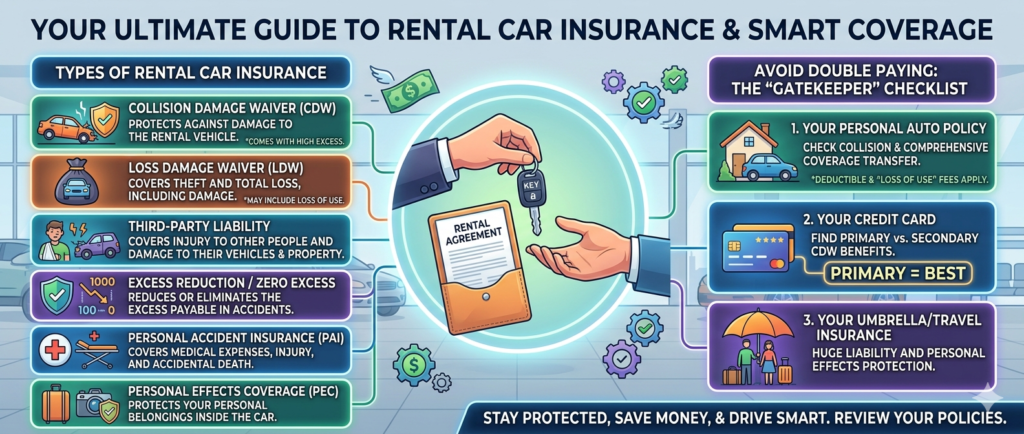
1. Collision Damage Waiver (CDW)
Collision Damage Waiver (CDW) is one of the most commonly offered types of Rental Car Insurance.
What it covers:
- Damage to the rental vehicle due to accidents
- Partial financial protection against repair costs
Key points:
- Usually included in rental agreements
- Comes with a high excess amount
- May not cover tyres, windscreen, or underbody damage
2. Loss Damage Waiver (LDW)
Loss Damage Waiver (LDW) is a broader version of Rental Car Insurance.
What it covers:
- Damage to the rental vehicle
- Theft or total loss of the vehicle
Key points:
- Often used interchangeably with CDW
- May include loss of use charges
3. Third-Party Liability Insurance
This is a legally required component of Rental Car Insurance in many regions.
What it covers:
- Damage to other vehicles
- Injury to other people
- Property damage
Key points:
- Usually included in the rental price
- Does not cover your rental vehicle
4. Theft Protection (TP)
Theft Protection is an important part of Rental Car Insurance.
What it covers:
- Vehicle theft
- Damage caused during theft attempts
Key points:
- Does not include personal belongings
- Often bundled with standard insurance
5. Excess Reduction / Zero Excess Insurance
This type of Rental Car Insurance is highly recommended.
What it covers:
- Reduces or eliminates the excess payable in case of damage
Key points:
- Minimizes out-of-pocket expenses
- Offers maximum peace of mind
6. Personal Accident Insurance (PAI)
Personal Accident Insurance adds safety to your Rental Car Insurance package.
What it covers:
- Medical expenses
- Injury or accidental death
- Emergency medical transport
Key points:
- Covers driver and passengers
- Optional but useful
7. Personal Effects Coverage (PEC)
This optional Rental Car Insurance protects your belongings.
What it covers:
- Theft or damage of personal items inside the car
Key points:
- Limited coverage
- May overlap with travel insurance
8. Roadside Assistance Cover
Roadside assistance enhances your Rental Car Insurance experience.
What it covers:
- Breakdown assistance
- Flat tyre support
- Battery jump-start
- Lockout services
Key points:
- Optional add-on
- Saves time during emergencies
What is Included in Basic Rental Car Insurance?
Most rental companies include basic Rental Car Insurance, such as:
- Third-party liability insurance
- Basic damage protection (CDW or LDW)
However, this coverage often comes with:
- High excess charges
- Limited protection
- Exclusions for certain damages
How to Choose the Right Rental Car Insurance
Selecting the right Rental Car Insurance depends on your travel needs:
1. Assess Your Risk
Driving in unfamiliar areas? Choose comprehensive Rental Car Insurance.
2. Check Existing Coverage
You may already have Rental Car Insurance through:
- Personal car insurance
- Travel insurance
- Credit cards
3. Understand Excess Costs
Always review how much you’ll pay in case of damage.
4. Read Terms Carefully
Check exclusions in your Rental Car Insurance policy.
Common Mistakes to Avoid
- Assuming all Rental Car Insurance covers everything
- Ignoring excess fees
- Skipping essential add-ons
- Not reading policy details
Conclusion
Understanding Rental Car Insurance is essential before hiring a vehicle. From Collision Damage Waiver (CDW) to third-party liability insurance and zero excess cover, each type plays a critical role in protecting you financially.
Choosing the right Rental Car Insurance ensures a safe, hassle-free driving experience and protects you from unexpected costs. Always review your options carefully before booking your next rental.